Ultimate Hut-to-Hut hiking Packing List: Trail Tested Essentials
There’s something magical about setting off on a multi-day adventure, knowing that each evening you’ll arrive at a cozy mountain hut with fellow hikers sharing stories over a hearty meal. Hut to hut hiking offers the perfect balance of wilderness adventure and comfortable accommodation, but getting your packing right is absolutely crucial for a safe and enjoyable journey.
Whether you’re planning your first hut to hut hiking adventure or you’re a seasoned walker looking to refine your gear selection, this comprehensive packing list will ensure you’re prepared for whatever the trail throws at you. From essential safety equipment to comfort items that make all the difference, we’ll cover everything you need for your multi-day walking adventure.
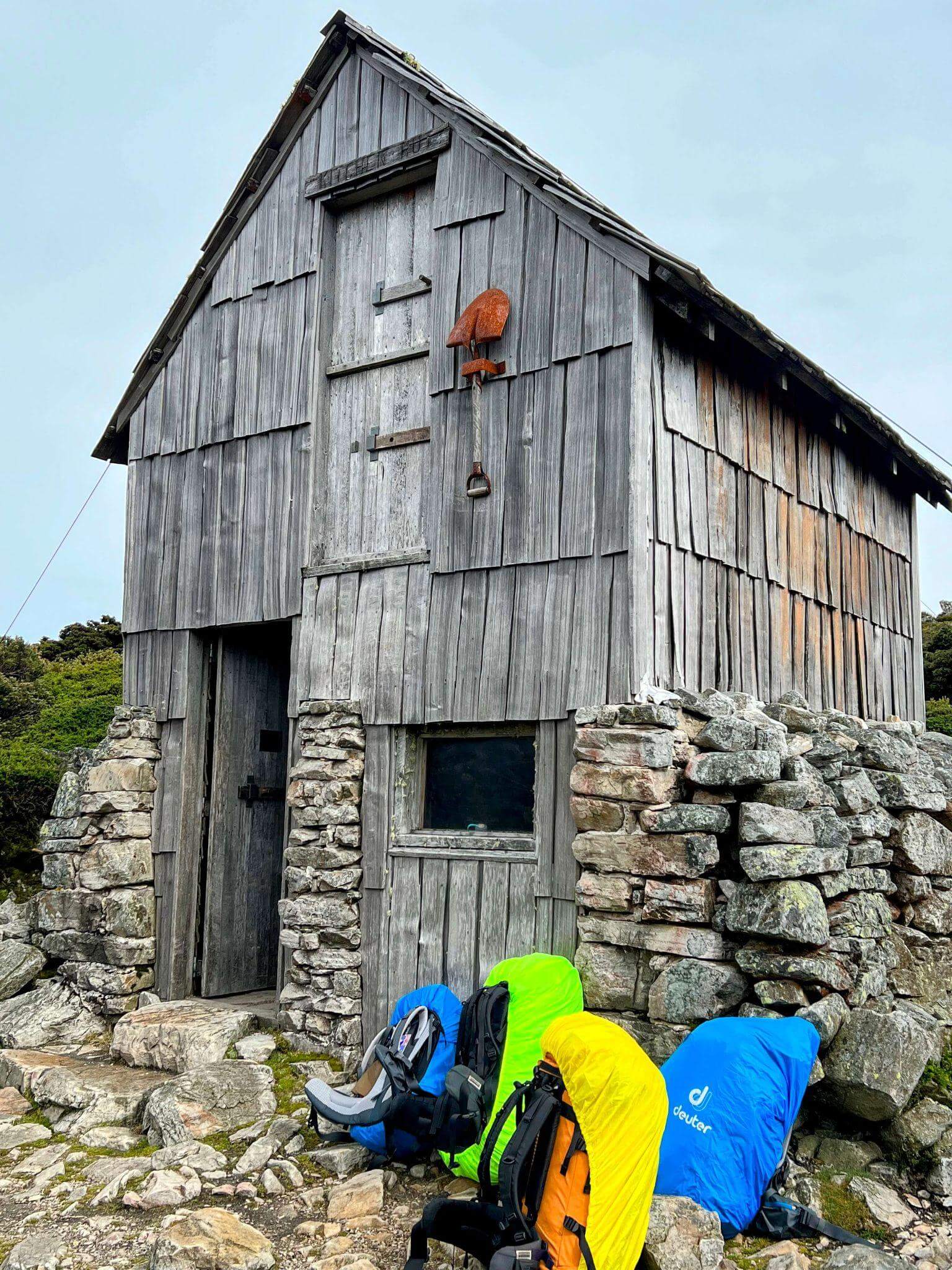
Waterproof covers for your pack are a must
Why Your Hut to Hut Hiking Packing List Matters
Unlike day hikes where you can retreat to your car if conditions deteriorate, multi-day hut to hut walks require complete self-sufficiency between accommodations. Spending day after day on the trail means you need to be more self-reliant, and once you’ve left the trailhead, there’s no going back to grab forgotten essentials.
The key to successful hut to hut hiking lies in striking the perfect balance between having everything you need while keeping your pack weight manageable. Every item should earn its place in your backpack through necessity, versatility, or both
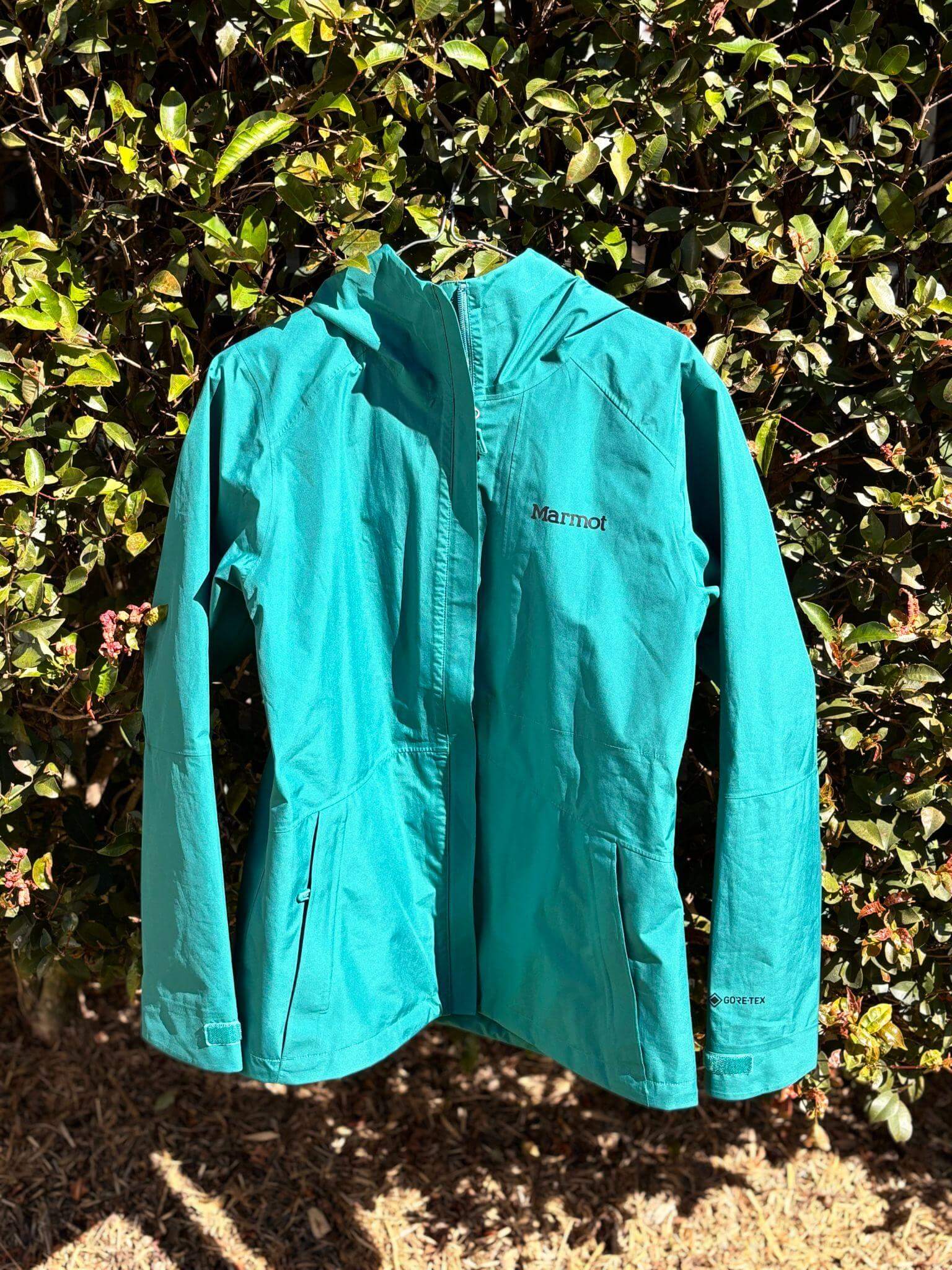
Essential waterproof jacket made from Goretex will keep out the rain and wind
Essential Hut to Hut Hiking Packing List
Safety Equipment (Non-Negotiable)
First Aid Kit Your safety is paramount, and a well-stocked first aid kit is your first line of defense. Include:
- Bandages and adhesive dressings
- Blister treatment packs (these are absolute lifesavers!)
- Pain relievers (ibuprofen and paracetamol)
- Antiseptic wipes
- Medical tape
- Any personal medications
- Emergency whistle
- Space blanket
Emergency Communication
- EPIRB (Emergency Position Indicating Radio Beacon) for remote areas
- Mobile phone with offline maps downloaded
- Emergency contact information
Navigation
- Physical maps of your route
- Compass
- Trail passes and permits
Waterproof Protection: Your Weather Shield
Here’s where many hikers make costly mistakes. A water-resistant spray jacket simply isn’t enough when you’re caught in a mountain storm miles from shelter. You need to stay completely dry, which means investing in quality waterproof gear.
Essential Waterproof Items:
- Gore-Tex jacket: Fully waterproof and breathable – worth every penny
- Waterproof pants: Don’t skimp here; wet legs lead to miserable hiking
- Pack rain cover: Protects your gear even with a “waterproof” backpack
- Waterproof stuff sacks: Organise gear into waterproof compartments
A waterproof and windproof jacket is a mandatory item on a hut-to-hut hike even in the middle of the summer, as mountain weather can change rapidly with temperature swings of up to 20°C.
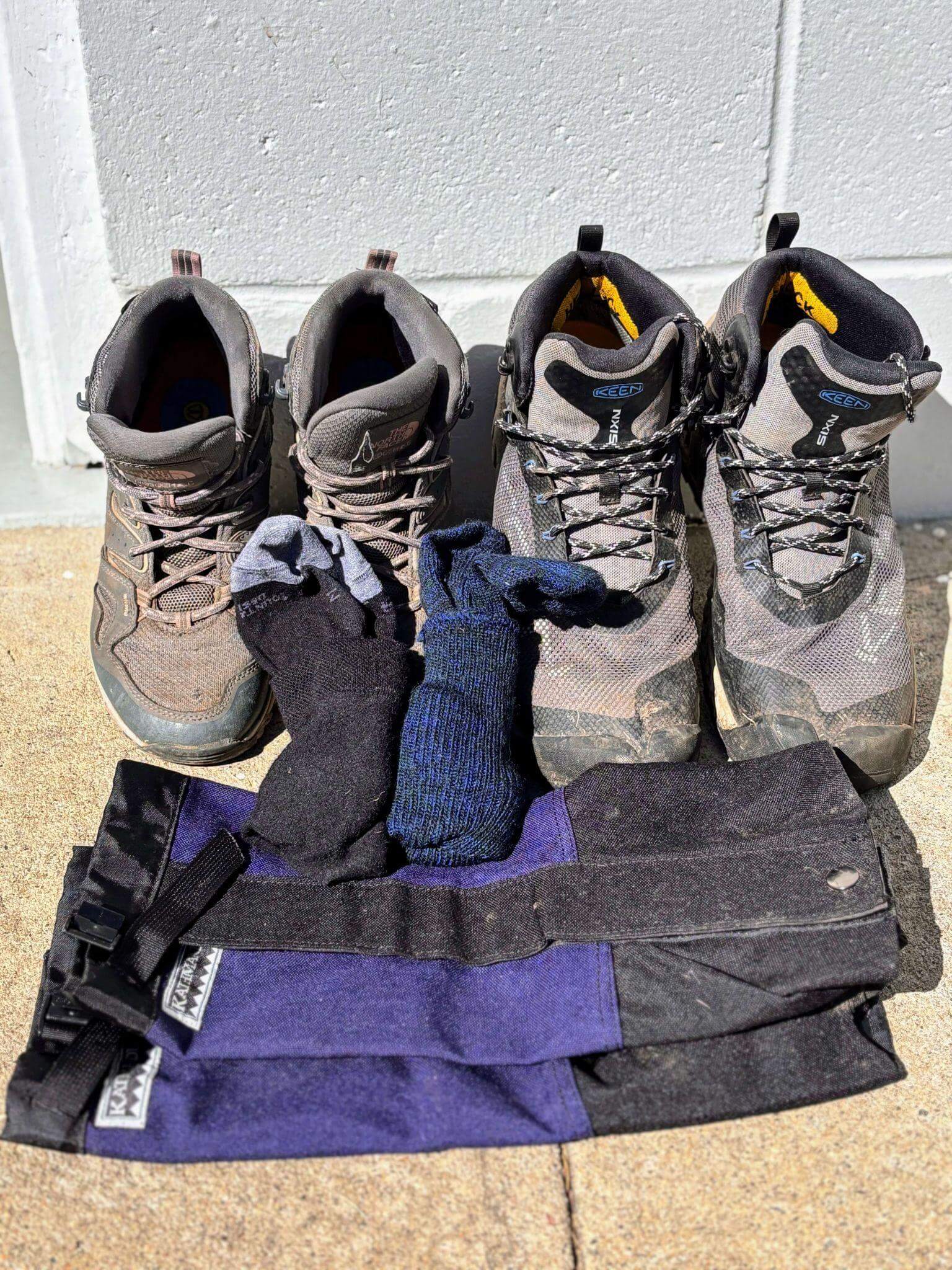
These Goretex boots are fresh off the trail. Two layer sock system + gaiters is the way to go.
Clothing System: Layers Are Your Friend
The secret to comfortable hut to hut hiking lies in a smart layering system, with merino wool as your best companion.
Walking Clothes (Pack Two Sets) Having a spare set is essential in case you get dirty, wet, or simply want to stay fresh:
- Merino wool base layers (top and bottom)
- Hiking shorts or pants
- Long-sleeved hiking shirt
- Insulating mid-layer (fleece or down vest)
Evening/Sleeping Clothes Pack one clean, comfortable set for huts:
- Lightweight pants or shorts
- Comfortable shirt or hoodie
- Clean underwear and socks
Accessories
- Broad-brim hat for sun protection
- Warm beanie for cold conditions
- Gloves (if expecting cold weather)
- Quality sunglasses
- Buff or neck gaiter
Footwear: Foundation of Comfortable Hiking
Your feet carry you the entire journey, so invest in quality footwear and sock systems.
Primary Hiking Boots
- Must be waterproof (Gore-Tex or similar)
- Must be properly broken in before your trip
- Ankle support for uneven terrain
Sock System (The Blister Prevention Secret) This two-layer approach has prevented countless blisters:
- Light inner layer (synthetic liner socks)
- Wool outer layer (cushioned hiking socks)
- Pack a second pair for longer trips
Evening Shoes After a long day on the trail, your feet deserve comfort:
- Keen sandals (or similar) – lightweight and quick-drying
- Can be worn with socks if it’s cool
- Functional over fashionable, but incredibly comfortable
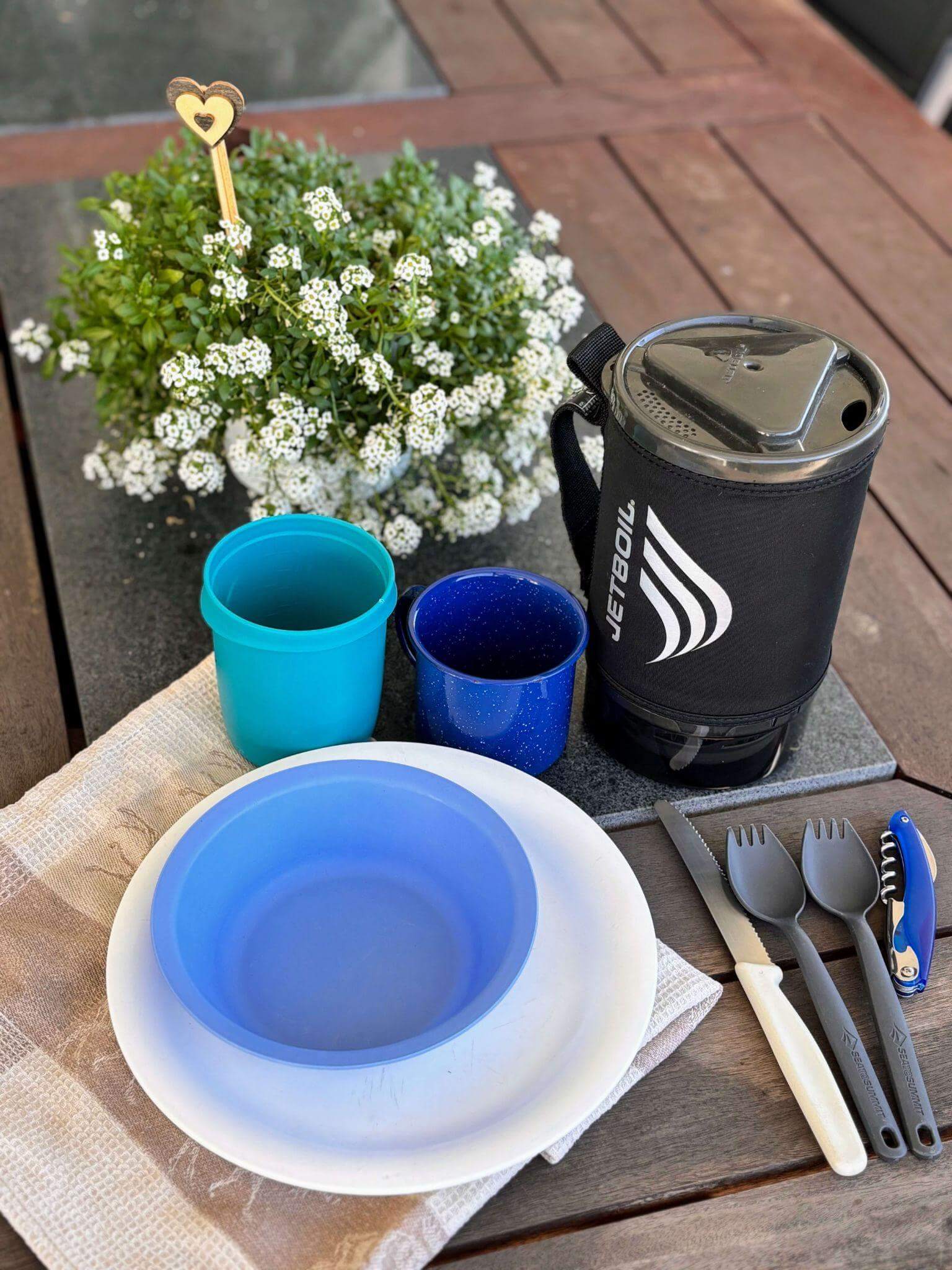
Keep it lightweight and simple for your cutlery and plates
Cooking and Eating Essentials
Most huts provide cooking facilities, but you’ll need your own utensils and dishware. If you do need cookware – invest in a JetBoil, it’s second to none.
Personal Eating Kit
- Spork (combines spoon and fork)
- Lightweight mug
- Bowl (doubled as a plate)
- One or two plates for meal prep (can be shared among group)
Cleaning Supplies
- Small bottle of biodegradable washing up liquid
- Compact dish scrubber or sponge
- Quick-dry tea towel
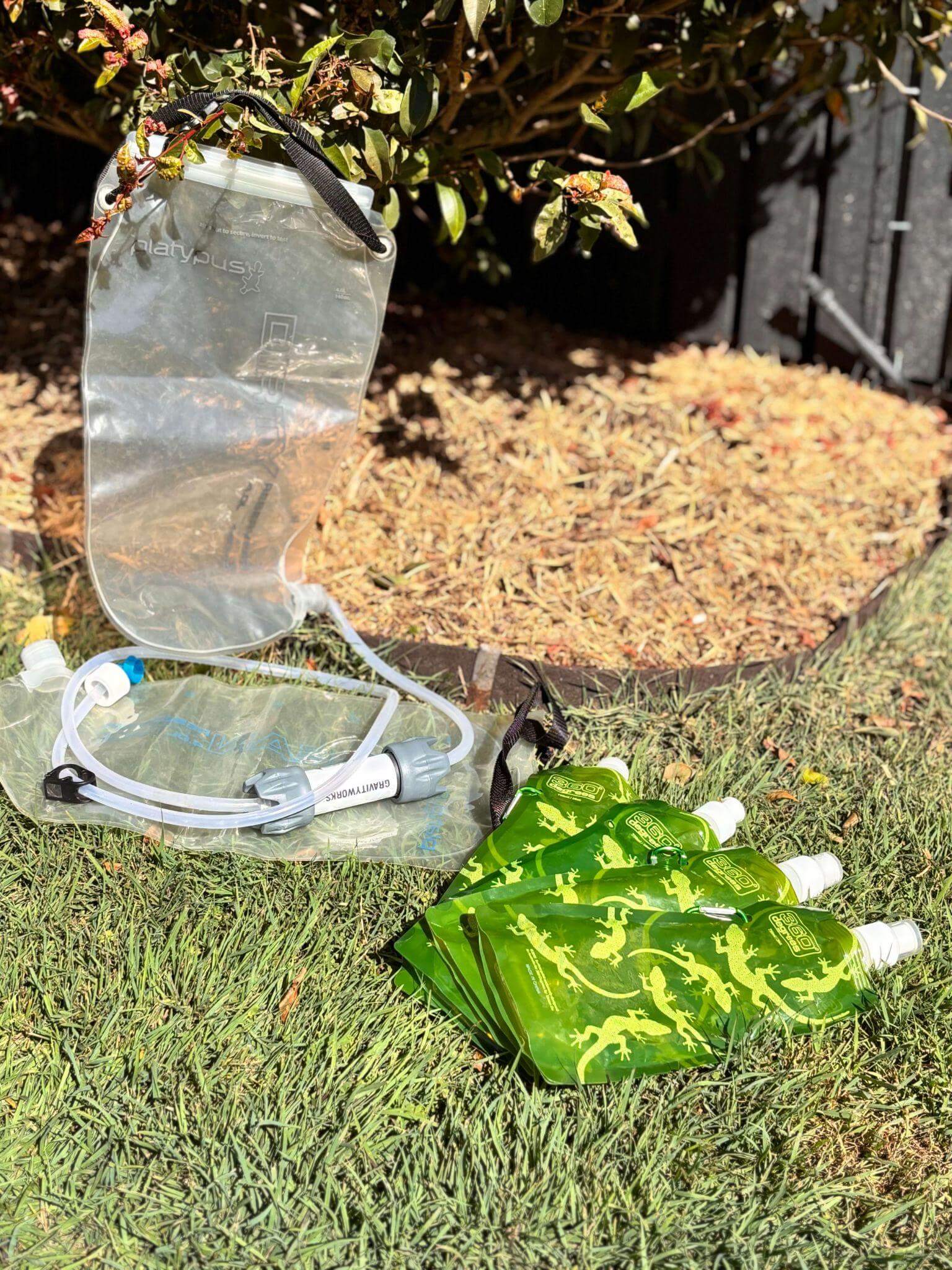
Gravity fed water filtration system for remote areas plus collapsable water bottles.
Hydration and Water Treatment
Staying hydrated is crucial for performance and safety.
Water Storage
- Collapsible plastic water bottles (space-saving)
- Hydration bladder for easy access while hiking
Water Treatment
- Water filter for remote areas without reliable fresh water
- Water purification tablets as backup
Personal Care and Hygiene
Keep items minimal, lightweight, and multipurpose.
Essential Toiletries
- Travel-sized biodegradable soap
- Travel-sized deodorant
- Wet wipes (biodegradable)
- Travel-sized moisturizer
- Vaseline (prevents chafing)
- Lip balm with SPF
- Sunscreen (high SPF)
- Roll-on insect repellent
- Travel-sized towel
Bathroom Essentials
- Toilet paper
- Hand sanitizer
- Small trowel for waste disposal
- Toothbrush and travel toothpaste
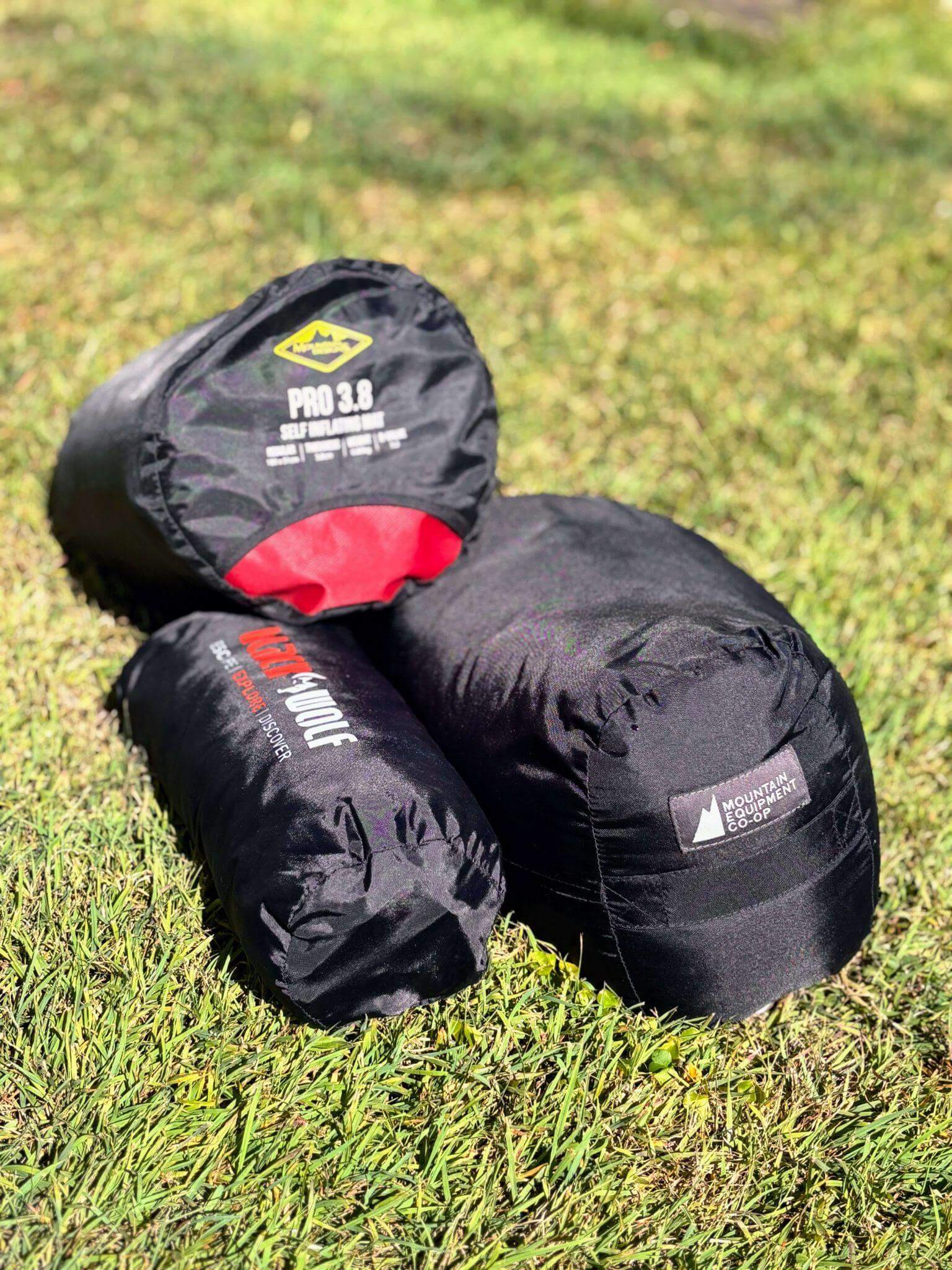
Quality sleeping bag, inflatable sleeping mat and inflatable pillow for a good night’s sleep.
Sleeping Comfort
While huts provide beds (often bunks), personal comfort items can significantly improve your sleep quality.
Sleep System
- Sleeping bag (lightweight for huts with heating)
- Optional inflatable pillow (luxury that’s worth the weight)
- Eye mask and earplugs for shared accommodations
Entertainment and Relaxation
After long hiking days, simple entertainment helps you unwind.
Lightweight Fun
- Pack of cards (weatherproof)
- Tennis ball or hacky sack
- E-reader or small book
- Journal and pen
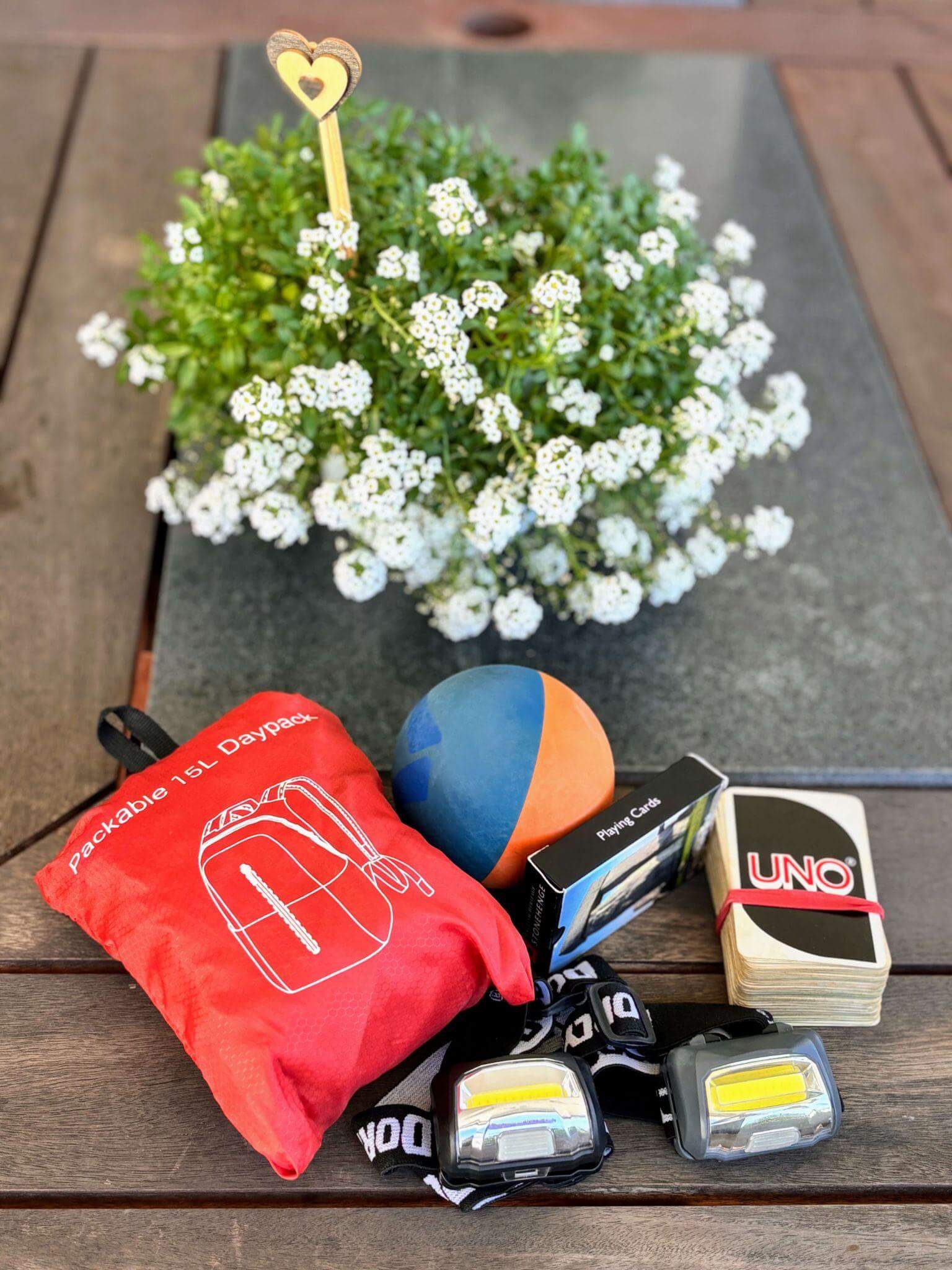
Apres-walk activities, day pack for short off-track excursions and head lamps for after dark.
Technical Equipment
Lighting
- Headlamp with extra batteries
- Small backup flashlight
Photography
- Camera with extra batteries/power bank
- Waterproof case or bag
Optional Gear
- Walking poles (particularly helpful for steep terrain and stream crossings)
- Gaiters (for muddy, sandy or bushy trails, or where there might be snakes)
Complete Hut to Hut Hiking Packing List Checklist
Safety & Navigation □ First aid kit (including blister packs) □ EPIRB (for remote areas) □ Maps and compass □ Emergency whistle □ Trail passes/permits
Weather Protection □ Gore-Tex waterproof jacket □ Waterproof pants □ Pack rain cover □ Waterproof stuff sacks
Clothing □ 2 sets walking clothes (merino layers) □ 1 set evening/sleeping clothes □ Broad-brim hat □ Warm beanie □ Gloves (if cold expected) □ Sunglasses
Footwear □ Waterproof hiking boots (broken in) □ 2 pairs hiking socks (liner + wool) □ Evening shoes (sandals/camp shoes) □ Gaiters
Cooking & Eating □ Spork □ Mug and bowl □ Plates (shareable) □ Biodegradable dish soap □ Dish scrubber □ Tea towel
Hydration □ Collapsible water bottles □ Water filter (if needed) □ Hydration bladder
Personal Care □ Biodegradable soap □ Travel deodorant □ Wet wipes □ Moisturizer □ Vaseline □ Lip balm □ Sunscreen □ Insect repellent □ Toilet paper □ Hand sanitizer □ Small trowel □ Toothbrush/toothpaste
Sleep & Comfort □ Sleeping bag □ Inflatable pillow □ Eye mask/earplugs
Technical & Entertainment □ Headlamp + extra batteries □ Camera □ Cards/games □ Walking poles (optional)
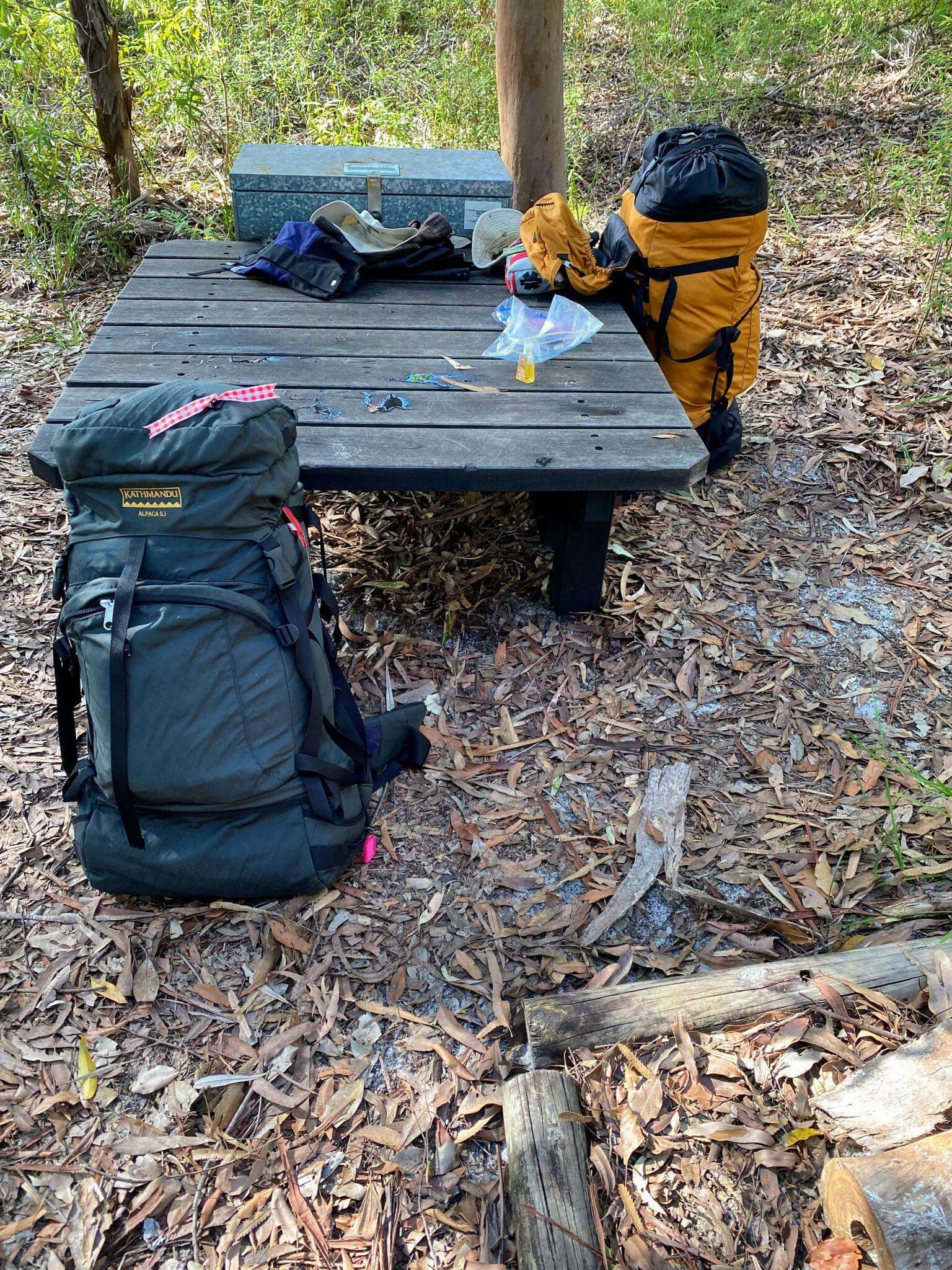
Sturdy packs with waist belt and adjustable shoulder straps is necessary
Smart Packing Tips for Hut to Hut Hiking
Visualisation Exercise Spend time visualising yourself on the trail and in various weather conditions. What would you need in a sudden storm? During a hot afternoon? This mental exercise often reveals forgotten essentials.
Food Strategy Pack slightly more food than you think you’ll need. For the trail, pack snacks like energy bars, jerky, hard cheeses and nuts that you can eat easily on the move. Energy levels drop quickly when hiking with a pack, and having extra food provides both physical fuel and mental comfort.
Clothing Reality Check You’ll probably need fewer clothes than you initially lay out. You only need three sets of clothes on your hut-to-hut packing list: two to wear during the day on the hike and the third one to wear around the hut. Focus on quality, multi-functional pieces rather than quantity.
Logical Packing System Organise your gear into smaller waterproof bags within your pack. Group similar items together:
- Safety items easily accessible
- Rain gear in outer compartments
- Daily essentials in top pocket
- Evening clothes at the bottom
Weight Testing Once packed, test your fully loaded pack weight by walking several blocks. If you can’t comfortably carry it for 30 minutes on flat ground, you certainly won’t manage it on mountain terrain for 6-8 hours daily.
Frequently Asked Questions About Hut to Hut Hiking Packing
What size backpack do I need for hut to hut hiking? A 40–60 litre backpack is ideal for multi-day hiking, with most hut to hut hikers finding 45-55 liters perfect for 3-7 day trips.
Do I need a sleeping bag for hut hiking? Research your specific huts beforehand. Many European huts require sleep sheets or sleeping bag liners for hygiene. In Australia and New Zealand, you’ll need to bring your own sleeping bag.
How much should my pack weigh? Aim for 15-20% of your body weight maximum. For a 70kg person, this means 10.5-14kg including water and food.
What if I forget something important? Some hut networks have small shops, but don’t rely on this. Make lists, check twice, and pack a day ahead to allow time for forgotten items.
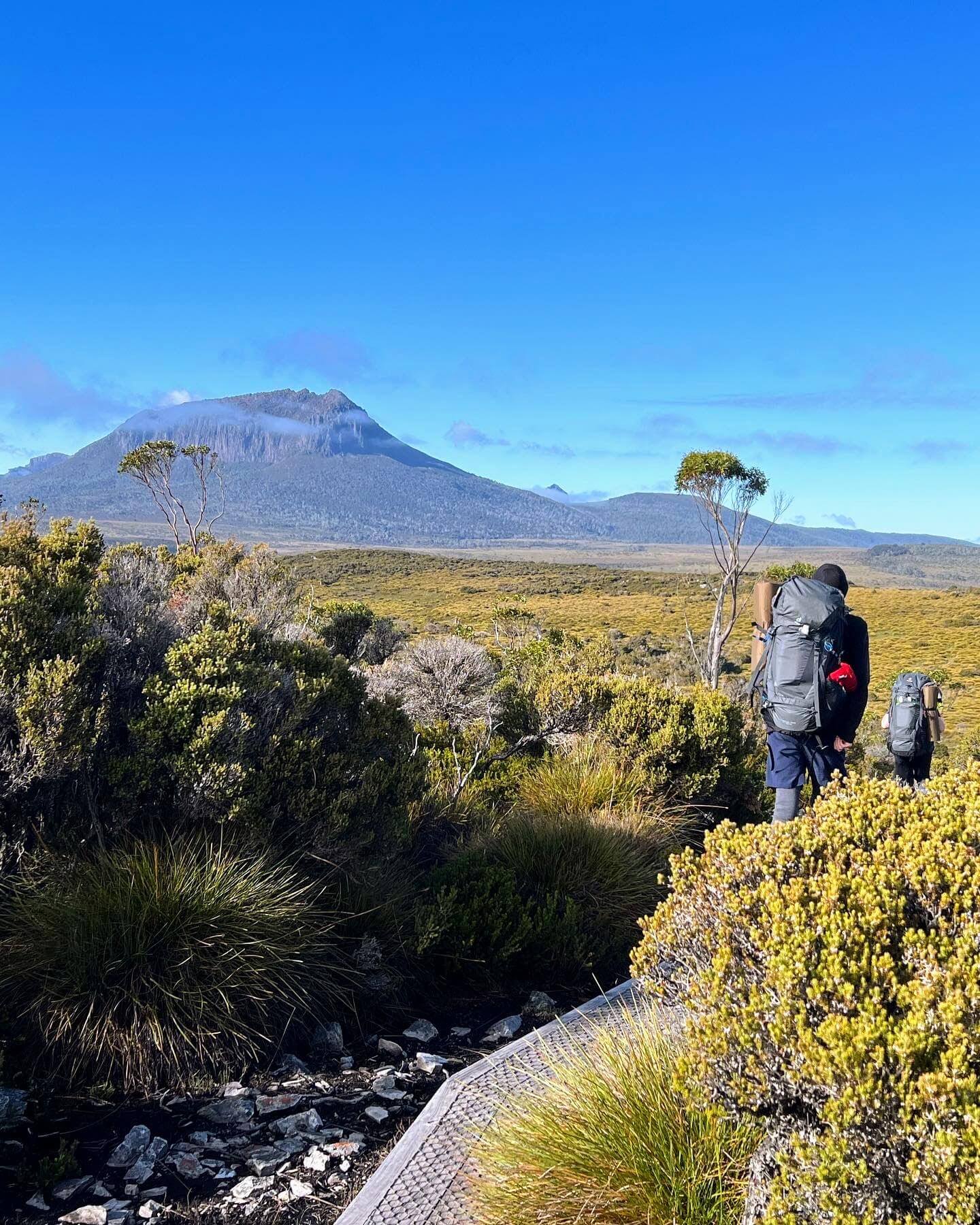
Nothing like hiking with everything you need on your back!
Making Your Hut to Hut Hiking Adventure Unforgettable
The beauty of hut to hut hiking lies not just in the stunning landscapes and physical challenge, but in the simplicity of carrying everything you need on your back. There’s incredible freedom in self-sufficiency, knowing that your carefully curated gear will see you safely through whatever adventures await.
Remember, your hut to hut hiking packing list is more than just equipment—it’s your toolkit for creating incredible memories. Every blister prevented by proper socks, every dry moment thanks to quality rain gear, and every comfortable night’s sleep contributes to an adventure you’ll treasure forever.
Take time to test your gear, practice packing efficiently, and don’t be afraid to invest in quality items that will serve you well for years of adventures to come. The trails are calling, and with this comprehensive packing guide, you’re ready to answer with confidence.
Safe travels, and may your hut to hut hiking adventures be filled with wonder, challenge, and the pure joy of putting one foot in front of the other in some of the world’s most beautiful places!
Planning your next adventure? Check out our other guides
Get meal planning tips with our guide on multi-day hiking nutrition.
First time walker? Check out our guide for your first multi-day walk.
Walking with kids? Check out our guide here.
Happy hiking!